

The cost of living in Paraguay depends on where you live and the services you need. A modest budget can work for some households, while international schooling, a car and private healthcare can substantially increase spending. Compare like-for-like costs before committing to a move.
We provide a precise breakdown of these expenditures to help you optimize your relocation strategy. This analysis evaluates real estate, daily consumption, and the territorial tax advantages that define the Paraguayan economic experience.
- What is the Monthly Cost of Living in Paraguay for Expats?
- Real Estate Market Dynamics and Rental Prices
- 3 Primary Sectors for Daily Spending
- Administrative and Tax Frameworks for Residents
What is the Monthly Cost of Living in Paraguay for Expats?
Use the figures below as starting assumptions only. An $800–$1,200 single-person budget or a $2,000–$2,500 family budget may not cover your preferred housing, health insurance and school fees. Test every category against actual offers before deciding that a total is affordable.
Understanding the financial landscape is the first step toward a successful relocation. The following breakdown provides a transparent view of the capital requirements for various profiles.
- Single Expat: $800, $1,200
- Family of Four: $2,000, $2,500
- Coworking: $100, $150
- International School: $300, $600/child
Budget Projections for Single Digital Nomads
A $1,000 monthly budget is a scenario to test, not a promise of a modern apartment and frequent dining out. First subtract a quoted rent and essential bills. Then assess what remains for food, transport, health and contingencies.
Coworking spaces in Asunción are highly efficient. Typical monthly memberships range from $100 to $150. These fees grant full access to high-speed infrastructure.
Strategic planning highlights the practical advantages of this jurisdiction. You benefit from a significantly lower cost of living in Paraguay for expats compared to Western hubs.
Financial Requirements for a Family of Four
A family budget needs separate quotations for housing, health cover and schooling. The illustrative $2,500 total should not be read as a guarantee that premium accommodation and international education for several children will fit within it.
Private education is a major consideration. Tuition fees for international schools range between $300 and $600 per child monthly. These institutions offer high academic standards.
Leisure spending is remarkably affordable. This includes dining out and weekend trips to nature reserves.
Purchasing Power and Currency Fluctuations
The guaraní floats against the dollar and euro. Foreign-currency income can buy more or less local currency as rates change. Use the BCP exchange-rate information as a reference, then check your bank’s actual rate and fees.
Local inflation trends primarily affect daily goods. However, price increases remain manageable. Imported luxury items carry higher premiums than local products.
Match the currency of your budget to your expenses, and keep a reserve for exchange-rate changes.
Cost of living: Real Estate Market Dynamics and Rental Prices
While daily budgets vary, housing remains the most significant fixed cost, shifting drastically depending on your chosen district.
Comparing City Centers to Suburban Residential Areas
Rental prices diverge sharply between Asunción’s core and its periphery. Villa Morra offers high-end apartments, whereas Luque provides spacious, affordable houses. This geographic choice defines your monthly overhead.
Investors face an average cost of $1,200 to $1,500 per square meter in Asunción. Conversely, smaller cities like Encarnación offer lower entry points. Market entry remains competitive for central units.
| District | Avg. Rent (1BR) | Property Price/sqm | Vibe |
|---|---|---|---|
| Villa Morra | $600+ | $1,500 | High-end & Trendy |
| Carmelitas | $550 | $1,400 | Upscale Residential |
| Luque | $350 | $950 | Affordable & Near Airport |
| Lambaré | $300 | $900 | Suburban & Quiet |
Property Acquisition and Ownership Rights for Foreigners
Before purchasing property, obtain independent legal advice on the title, seller’s authority, debts and any restrictions affecting the property or buyer. Do not assume that a general statement about foreign ownership resolves the legal checks for a particular plot.
Standard rental leases typically last one year. Landlords often demand a “codeudor” or a larger security deposit. These guarantees secure the transaction against potential defaults or property damages.
Understanding the cost of living in Paraguay for expats involves mastering administrative procedures related to housing. Efficient documentation speeds up the acquisition process significantly.
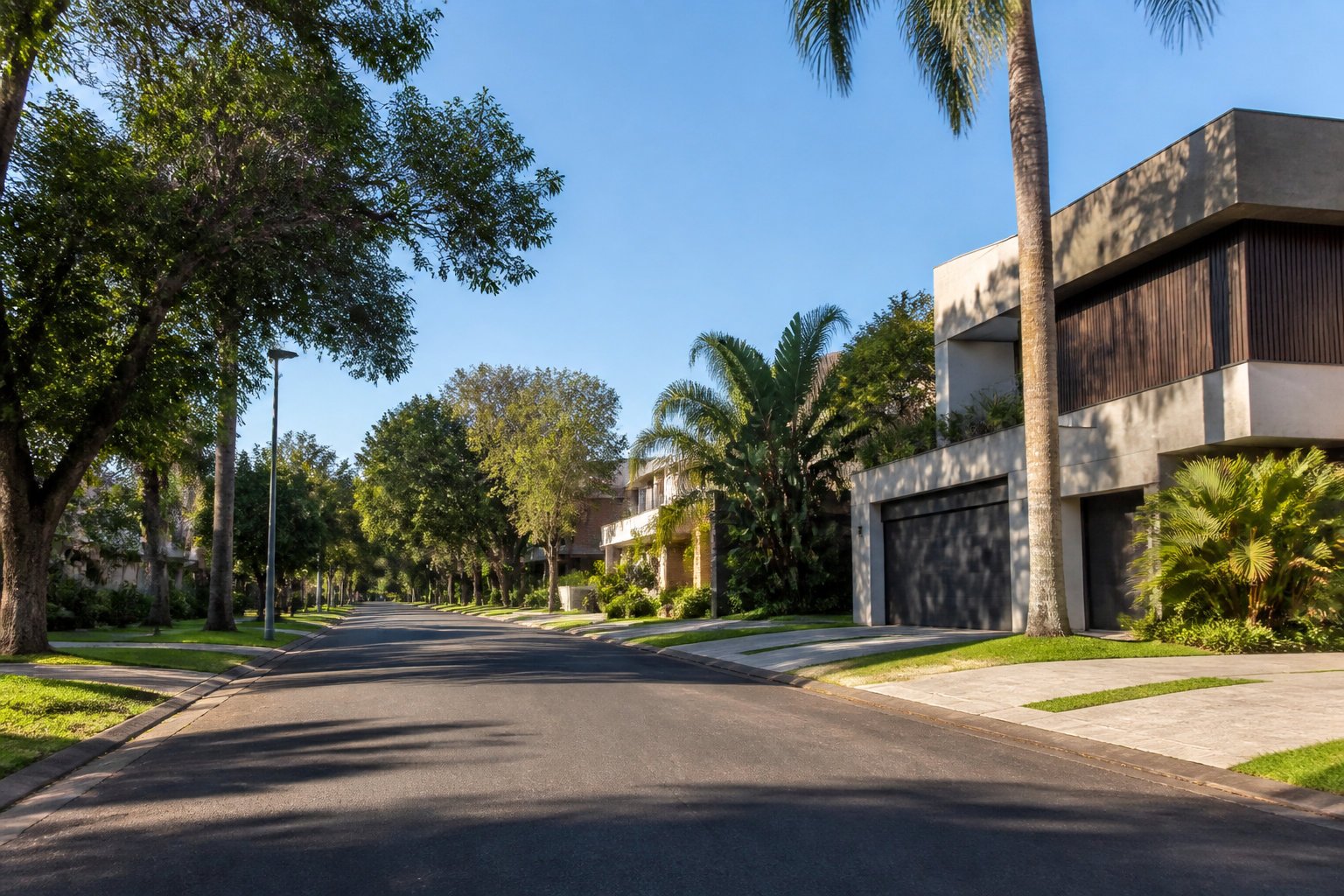
Cost of living: 3 Primary Sectors for Daily Spending
Beyond the roof over your head, three specific categories, food, utilities, and health, will dictate your monthly financial rhythm.
Grocery Spending and Local Market Standards
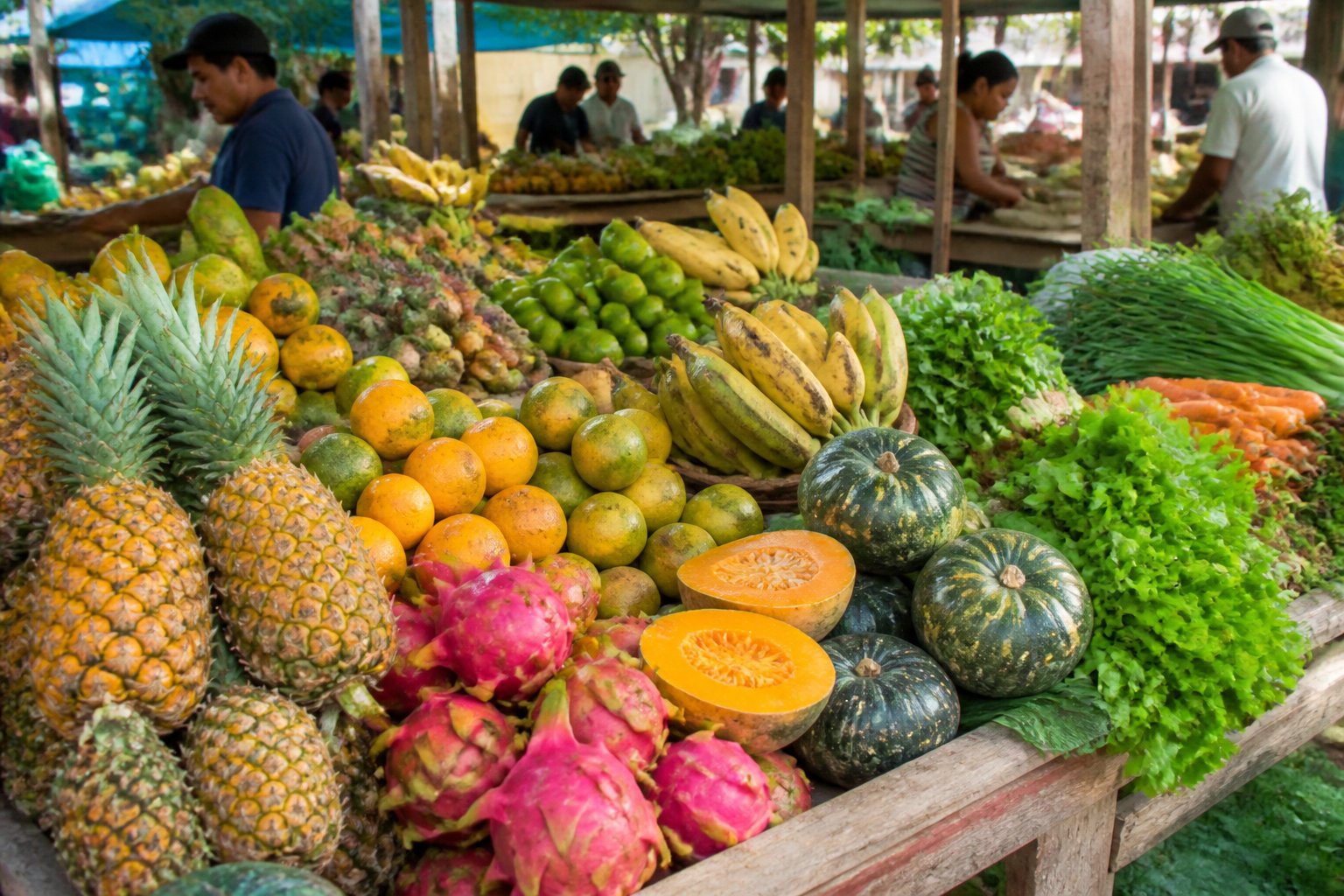
Shopping habits define your budget. Large chains like Superseis offer convenience, but local ferias provide significant savings. Fresh produce prices drop drastically at street markets compared to modern convenience stores.
Shop at local ‘Ferias’ for fresh produce to save compared to chains like Biggie or Superseis; Beef is a local specialty and very affordable at $6/kg.
Staples remain remarkably affordable here. High-quality proteins and dairy products anchor the household economy. Expect these typical prices during your weekly shop:
- Milk (1L): $0.80
- Beef (1kg): $6.00
- Bread: $0.70
- Local Beer: $1.20
Utility Bills and Internet Connectivity Standards
Monthly utility costs remain manageable. ANDE manages electricity, while ESSAP typically handles water. Note that bills spike in summer due to heavy air conditioning usage.
Electricity (ANDE) bills can double or triple during summer months (December-March) due to intensive air conditioning use.
Digital nomads find reliable infrastructure. Fiber optic internet is widely available in urban hubs. High-speed home plans generally cost between $30 and $50 monthly.
Healthcare Quality and Private Medical Insurance Fees
Compare healthcare providers for the treatment you actually need. Ask about specialists, emergency arrangements, language support and costs. English-speaking staff and particular equipment should be confirmed with the facility.
Request a personal health-cover quotation based on age, medical history and required benefits. Check exclusions, waiting periods, hospital access and evacuation cover. The $50–$100 range below is only an illustrative allowance and may be unsuitable for your needs.
Cost of living: Administrative and tax costs for residents
Budget for immigration documents, translations, professional advice and bank charges as well as everyday expenses. These costs depend on your situation and are separate from your monthly living budget.
Understand the source of your income
Paraguay applies source rules to personal income. However, a foreign client or payment in dollars does not automatically make income foreign-sourced. Work performed from Paraguay needs its own tax assessment. Read the DNIT guidance on personal income tax and discuss your actual activity with a qualified adviser.
IVA has rates of 5% and 10% depending on the transaction. It is not a single flat rate for everything. The DNIT IVA page explains the framework. Your previous country’s tax rules may also remain relevant.
Allow for banking and transfer costs
Opening requirements vary by bank and product. Basic guaraní accounts and conventional accounts with dollar services have different conditions. A cédula is an identity document, separate from the residence card. See our guide to opening a bank account in Paraguay for the practical comparison.
Before sending money, confirm the receiving account’s limits, currency, exchange rate, intermediary charges and source-of-funds requirements. A low advertised transfer fee does not describe the whole cost.
Cost of living: FAQ
What is the estimated monthly budget for an expat living in Paraguay?
For a single digital nomad, a comfortable lifestyle in Asunción can be modelled with an illustrative $800–$1,200 USD starting budget. Check whether your actual rent, internet and food costs fit that total. We observe that many remote workers find this price point provides an exceptional quality of life compared to North American or European standards.
Families should anticipate a higher monthly expenditure, generally ranging from $2,000 to $2,500 USD. This estimate includes a spacious residence in a secure neighborhood, private education fees for children, and comprehensive private health insurance, subject to the actual quotations and exclusions.
How do rental prices compare between different neighborhoods?
Housing costs vary significantly based on location and amenities. In premium districts like Villa Morra or Carmelitas, a one-bedroom apartment in the city center ranges from $300 to $800 USD. Conversely, suburban areas such as Luque offer more competitive rates, with similar units averaging around $240 to $312 USD per month.
For those looking to settle long-term, property acquisition remains highly accessible. Prices in Asunción residential zones fluctuate between $800 and $1,500 per square meter. Obtain independent legal checks before any property commitment.
What are the typical costs for groceries and daily essentials?
Daily expenses for food are remarkably affordable, especially when sourcing fresh produce from local markets (Ferias). Basic staples are priced competitively: a liter of milk costs approximately $0.80, while high-quality local beef is available for about $6.00 per kilogram. A standard meal at an inexpensive local restaurant typically costs between $3 and $7 USD.
We recommend budgeting for imported luxury items, which carry higher price tags due to logistics. However, by balancing local supermarket chains like Superseis with traditional markets, expats can maintain a high-quality diet while keeping monthly grocery bills between $150 and $350 USD per person.
Is private healthcare affordable for foreign residents?
Affordability depends on your needs and coverage. Request prices for the providers and treatments you expect to use. Confirm language support, specialist availability and emergency access directly instead of assuming every private clinic offers the same service.
Ask each insurer for a written quotation, exclusions and waiting periods. Age, existing conditions and benefits can change the price substantially. Treat any general premium range as a planning placeholder.
Does receiving income from abroad make it tax-free?
No automatic conclusion follows from the payer’s country or the currency. Establish the source and nature of the income, where the work is performed and any continuing obligations abroad. Immigration status, bank accounts and Tax Residency are separate matters.
What documents do banks request?
The checklist varies. Many digital offers require a Paraguayan cédula, while other products also require income and source-of-funds evidence. Confirm the exact requirements directly with the bank before transferring funds.
How should I validate the figures in this guide?
Collect current offers for your chosen home, school, health cover and internet plan. Convert them at an actual available exchange rate, add one-off moving costs and keep a contingency reserve. Our complete living in Paraguay guide gives a broader planning method.
FREE GUIDE
Your move to Paraguay starts here.
A free guide with over 100 pages on residency and tax residency in Paraguay, to help you prepare your plans step by step.